
Presents
Drama, Satire, and Soul
Sunday, October 5, 2025
Hopkins High School
Keehun Nam, Music Director
Fanya Lin, Piano
Concert Program
Eugene Onegin, Piotyr Ilyich Tchaikovsky (1840–1893)
- Polonaise
- Waltz
Lieutenant Kijé Suite, Sergei Prokofiev (1891–1953)
- Birth of Kijé
- Romance
- Kijé’s Wedding
- Troika
- The Burial of Kijé
Piano Concerto No. 2 in C Minor, Sergei Rachmaninoff (1873–1943)
Fanya Lin, Piano
Special thank you to Schmitt Music for sponsoring this concert by providing the Steinway Piano used in today’s performance.

Program Notes
By M. Jensen and S.M. Pargal
Eugene Onegin, op.24 (1879)
Polonaise & Waltz
Based on Alexander Pushkin’s verse novel Eugene Onegin (1833), Piotyr Ilyich Tchaikovsky composed an episodic opera he described as “lyrical scenes.” Set in St. Petersburg, the lyric opera tells the story of the titular Eugene Onegin: a selfish hero who lives to regret his initial denial of Tatyana and her love. As Tatyana grows, she comes to see Onegin’s faults and ultimately rejects him once he realizes his folly and returns, asking for love once freely given. The pieces performed today are the dance scenes ‘Waltz’ and ‘Polonaise’ at the beginning of Act 2 and Act 3 respectively.
Lieutenant Kijé Suite, op. 60 (1934)
Lieutenant Kijé is a fictional character in Russian literature who is featured in short stories from the 1870s, a 1928 novella by Yuri Tynyanov, and a 1934 film scored by Sergei Prokofiev. A satire on bureaucracy and its absolutely powerful monarch, the story follows a transcription error that creates a fictional soldier named Kijé and depicts his rise through the ranks of the Russian Army. Emperor Paul I demands to meet this famed soldier and the bureaucrats, caught in their hoax, tell the emperor that the soldier known as Kijé has died. The emperor responds, “What a pity, he was a good officer.”
In March of 1934 the film Lieutenant Kijé premiered as one of the earliest sound films made in the Soviet Union. It was received relatively well, but the standout performance was Sergei Prokofiev in his first attempt at film music. Prokofiev had moved to France to avoid the Russian Civil War in 1918 and had built an impressive reputation as a world-class pianist. By the late 1920s, the artist was beginning to turn his focus towards composition alongside performance in the Soviet Union and the opportunity to score a distinctly Soviet project as his first commission. Prokofiev was known for his acerbic wit, so the story of Kijé poking fun at the absolute monarchy was one he was more than willing to score. In December of 1934, the Lieutenant Kijé Suite was first performed as a five movement suite, excerpts from the film’s score now arranged for a concert orchestra. Five main themes can be found throughout the Suite loosely following the plot of the film, detailing the meteoric rise and ultimate fall of the phantom soldier. Prokofiev would return home to the Soviet Union, honored as an ambassador of Soviet art and culture, in the year following Kijé’s publication.
Piano Concerto No. 2 in C Minor, op. 18 (1901)
Though Rachmaninoff’s Piano Concerto No. 2 is considered one of the composer’s greatest triumphs today, it followed on the heels of a major musical setback and subsequent low period in his life. Following a disastrous 1897 premiere of his Symphony No. 1 in D Minor, Rachmaninoff abandoned all other in-progress compositions and devoted himself solely to conducting. In 1899, the British Philharmonic Society invited the despondent artist for his London debut in the hope that Rachmaninoff might present a piano concerto, yet the shaken composer refused to even consider working on such a piece. Despite this, the British press received him favorably and, in combination with encouragement from friends during an Italian vacation, the composer’s musical spirits were revived. He began working on what would become the Piano Concerto No. 2 in 1900, presenting the second and third movements later that year. With the work received resoundingly well by initial audiences, Rachmaninoff finished the first movement and the piece premiered in full on October 27, 1901.
The Concerto itself is a titanic composition — arguably the composer’s most enduring, popular piece. Rachmaninoff himself performed the Concerto a total of 143 times during his life, and it has held the number one spot on ClassicFM’s annual ‘Hall of Fame’ poll for the past three years, highlighting its popularity with both past and present audiences.
Biographies
Keehun Nam, Music Director
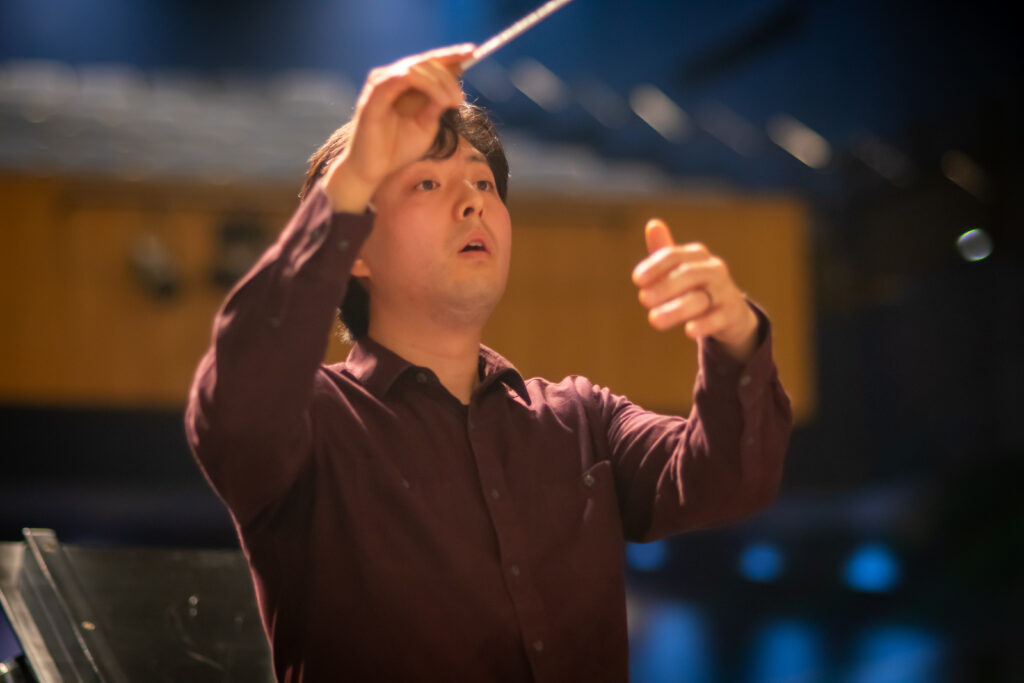
Nam currently serves as the Artistic Director of the Southeast Minnesota Youth Orchestras, where he conducts the top ensemble and sets the artistic vision for the season. He has served in numerous leadership roles, including Interim Director of Orchestras at the University of Wisconsin–La Crosse, Musical Director of the Ithaca College Sinfonietta, and Founder of the Vanderbilt Commodore Orchestra. Nam’s guest conducting appearances span both North America and Europe, with performances in Berlin, St. Petersburg, Cyprus, the Czech Republic, and Bulgaria.
A native Minnesotan, Nam grew up in Eden Prairie and holds a Master’s degree in Orchestral Conducting from Ithaca College and a Bachelor’s degree in Musical Arts from Vanderbilt University.
Fanya Lin, Piano
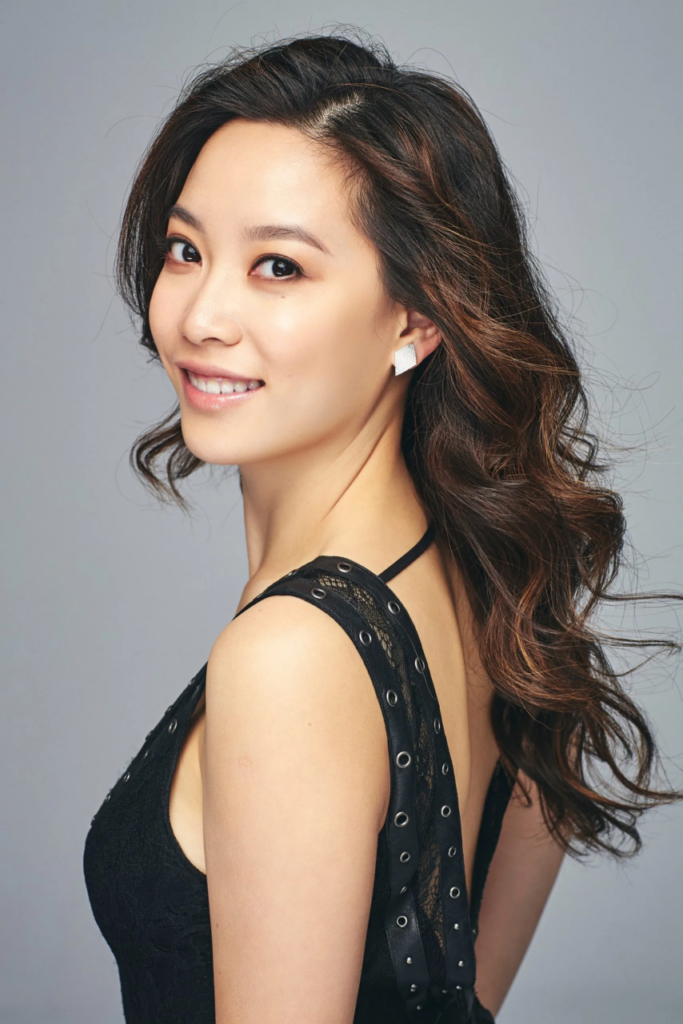
Described as a “striking interpreter” who gives a “committed and heartfelt performance” by Musical America and The New York Times, pianist Fanya Lin has entranced audiences worldwide with her charismatic and fiery performances. Her orchestral appearances include the Utah Symphony, Savannah Philharmonic, The Jackson Symphony, Mississippi Valley Orchestra, New Art Symphony, among others. Her concerto album Rhapsodic with Maestro Theodore Kuchar and the Lublin Philharmonic was released by Navona Records and distributed by Naxos in 2023.
An avid soloist, Fanya promotes classical music to the public by creating thematic concert programs and engages her audience by presenting interactive performances. Her solo recitals have been featured in numerous prestigious concert series, including the Schubert Club Musicians on the Rise, the Stecher and Horowitz Young Artist Series, and The Steinway Society of Western Pennsylvania. As a philanthropist, Fanya has collaborated with various non-profit organizations as well as psychological and social service associations through fundraising galas and salon concerts to create access for education and promote mental health awareness.
A native of Taipei, Taiwan, Fanya is a top prizewinner of the Hastings International Piano Concerto Competition, Concours International de Piano France-Amériques, New York International Piano Competition, and Seattle International Piano Competition. Fanya earned her Doctoral Degree at the University of Minnesota under the guidance of Emerita Distinguished McKnight Professor Lydia Artymiw; her Master’s Degree at The Juilliard School with Professor Hung-Kuan Chen and Jerome Lowenthal; and her Bachelor’s Degree at Weber State University with Dr. Yu-Jane Yang. Currently, Dr. Fanya Lin is serving as the Associate Professor of Practice in Piano at the University of Arizona, where she teaches applied piano lessons, chamber music, piano literature, and Yoga for Musicians course.
Violin I
Marion Judish, Concertmaster
Steve Chafee
Darrel Chew
Anna Tessman
David Brown
Kenneth Schuster
Diane House
Violin II
Ginny Bement, Principal
Barbara Flooding
Nancy Birth
Joshua Lindgren
Kathleen Schularick
Jean Liss
Max Clifford
Christina Orton
Viola
Stella Anderson, Co-Principal
Matt Dehnbostel, Co-Principal
Allison Fron
Dawn Anderson
Cello
Ann Zettervall, Principal
Avery Johnson
Carl Passal
Mary Beth Berg
Katie Pargal
Elizabeth Karges
Beth Janke
Bass
Mike Steiner, Principal
Michael Bromer
Curtis Bird
Ethan Johnson
Flute
Emily Aberle, Principal
Sarah Toland
Piccolo
Anita Rieder
Oboe
Dawn Alitz, Principal
Alyssa Jermiason
Clarinet
Tori Okwabi, Principal
Alan Kolderie
Tenor Sax
Doug Matuska
Bassoon
Paul Humiston, Principal
Sam Grabarski
Horn
Zanne Burton, Principal
Melissa Kalal
Sam Crocker
Allie Jensen
Trumpet
Ben Alle, Principal
Miriam Dennis
Dean Heller
Trombone
Patrick Anderson, Principal
Brent Rundquist
Bass Trombone
Michael Okwabi, Principal
Tuba
Dean Shea, Principal
Timpani
Chris Mahan
Percussion
Chris Mahan, Principal
Kelly Grill
Paul McKenzie
Harp
Rachel Brandwein
Piano
Yanjue Lin
Assistant Conductor
Eli Ross
WSO BOARD
Lisa McDonnel, President
Ron Frazzini, Vice President
Miriam Dennis, Secretary
Matt Ouska, Treasurer
Jacque Frazzini, Director
Beth Karges, Director
Paul McKenzie, Director
Doug Schmitt, Director
WSO STAFF
Katie Pargal, Executive Director
Keehun Nam, Music Director
Marion Judish, Concertmaster
Kinza Brue, Librarian
Emily Aberle, Personnel Manager
Michael Okwabi, Production Manager
Lisa Sanderson, Marketing Manager
Thank You to our WSO Donors
(August 2024 – Present)
VISIONARY ($2,500 or more)
Dr. Michael and Carol Bromer
Lowell E. Hammer
Todd and Lisa McDonnel
The Meyer-Grabarski Charitable Fund
Plymouth Rotary Club
DIRECTORS CIRCLE ($1,500 – 2,499)
Marilyn Bierden
Lunds & Byerlys – Wayzata
Northern Tap House
GUARANTORS ($800 – 1,499)
Nancy and Steven Birth
Matthew and Christina Ouska
Shravan and Katie Pargal
Dr. Carl Passal and Karen St. John
BENEFACTORS ($500 – 799)
Anonymous
Daniel Dulas and Cheryl Hirata-Dulas
Mike and Dagne Gustafson
Paul and Julie Humiston
Lions Club Wayzata
Nancy and Duane McDonnel
Jane M. and Daniel J. Murphy (in honor of Kathleen Schularick)
Bryan Nelson and Janice Sinclair
Michael B. and Barbara A. Steiner
PATRONS ($250 – 499)
Mark and Anita Boyd (in honor of Paul Humiston)
Don and Joann Leavenworth
John and Joyce Myers
Steve and Jill Schendel (in memory of Rose Cronk)
FRIENDS ($50 – 249)
Peter and Sarma Alle (in honor of Ben Alle)
Stella N. Anderson
J. Michael Barone
John and Nan Beard
Roger Bergman
James Boyce
Mary Brown and Lorraine Brasket
Nancy Caswell
Joe and Lois Duffy
Carol Eldevik (in memory of Randi Claire Eldevik)
Robert Epstein
Douglas Federhart and Stuart Holland (in honor of Carl Passal)
Doug Frazzini
Ron and Jacque Frazzini
Joe Green and Trudi Anderson
Mary Lois Hall and Anja Kara Curiskis
Katie Hammond
Deva Anne Hess
Shirley S. Hogan (in memory of Richard Hogan)
Kent and Marylyn Howe
Marion Judish
Paula Klinger (in memory of John Klinger and in honor of Zanne Klinger Burton)
Caroline Ledeboer
Elizabeth Limpert (in honor of the Brahms project)
LTD Brewing
Luce Line Brewing
Xiaofan and Kathy Mai
Carol Moller
Dale and Marilyn Nordquist
Dan and Cheryl Oie (in honor of Hannah Schendel)
John and Mary Pagnucco
Carol and Robert Parrish
Carol and Brian Parsons
Carol Peterson
Donald and Christine Rasmussen
Jon and Glenda Roe
Michelle Rothwell
Janis Saari
Edward and Mary Sheridan
Rochelle Spevacek
Virginia Sutton (in memory of Stephen French)
Irma Thies
Bonnie Weisenburger
Lauri and John Weisenburger
Jennifer Wilhem
Laura Williams
Kathleen Winters
Gene and Karen Zaske